First of all, the best that I can tell, "Thuya" is pronounced "Twee-ya". According to The Wood Database, the wood is from Morocco, Spain, etc. It is rare.
This burl I first spotted at Windsor Plywood in Winnipeg somewhere around 1987 and I was immediately drawn to it. There it sat, all 80 pounds of it, gleaming in its waxy sheath, but unmistakably a beautiful piece of wood. The price reflected that.
That was before my woodturning days as I was doing flatwork and building some furniture pieces. Did not even have a lathe, and when I finally got one in 1996 it was too small to even consider a piece like this. I could not afford it anyway. The price had actually increased.
Several years later, I had a larger lathe and thought about this burl, and behold, it was still there. I made an offer, but Windsor Plywood would not consider it. I thought since it had sat there for 12 or 13 years they might. I guess it was a bit of a centerpiece in the showroom.
Then I began teaching classes at Lee Valley Tools, and by now had a larger lathe. I had not forgotten that burl. And then I met Mike Walter - brash and funny and confident and a bit intimidating. And big. But I don't back down easily and gave back what I got, and quickly picked up that was what he wanted - and we had a great time. He was quick to determine and announce that his Oneway was a vastly superior machine to my General, and I countered with the fact that I had demonstrated on both his Oneway and my General at the same show, and had my choice of machines and chose the General. I thought it fit me better and vastly extra cost of the Oneway did not warrant my purchase of it. "Value for money", I told him.
Sometime during that day I told the class about the thuya burl and my failure to get a deal on it.
Then, one day I got an email from Mike. It simply said "Help". In the email he told me he wasn't having fun using his scrapers and the gouge seemed like more fun. Well - yeah, Mike. Could I come over?
We were members of the same club by now, and Mike missed no opportunity to tell everyone that his chainsaw was bigger than mine (he bought his Husquvarna after seeing mine), his lathe was better, and needling me just for fun. Of course, we were coffee buds by now, and he was learning some new skills from me. He always let people know we were friends and he was having fun at my expense.
Then, one day he announced that he had thuya burl sitting on a pedestal in his living room, and that he had purchased it for less than I had offered Windsor Plywood. And from then on I did not hear the end of it. It stopped when he told me at coffee, one day, that he had throat cancer.
Mike was a private man, and during his treatments he was not around and did not want visitors. When I did see him it was at coffee with Ed Tabachek, who also had cancer. They formed a special bond, and I am so glad I was able to be a part of that trio. But, Mike only rallied for awhile, and one day he called and told me he wanted me to have the burl. He said, "I only bought it to needle you, and I thought that one day I would have the skills to know what to do with it. I don't have a clue, and I you would know what to do with it."
So, I bought it from him for what he paid for it, and promised him that when I put the chainsaw to it, I would make sure he was present so he could give me grief the whole time. I told Ed the same thing.
However, by now Karen and I were wintering in Texas, and when I got back in the spring in 2015 I phoned Mike to see how he was doing and could we get together? His wife told me Mike had passed while I was gone. Not that long after, Ed was gone, too, and I had missed the opportunity to cut that burl with my friends there.
So, at a club meeting I announced that I was going to cut up the burl, and I had room for 6 or 7 people to come and harrass me while I did the deed, just like Mike and Ed would have done. The rest of this story, in pictures and words, is that day.
This story closes with regret that I could not fulfil my promise. I miss those guys, terribly, and I hope the story somehow makes up for not having them there.
There is an earlier and shorter version of this story in this Word document.
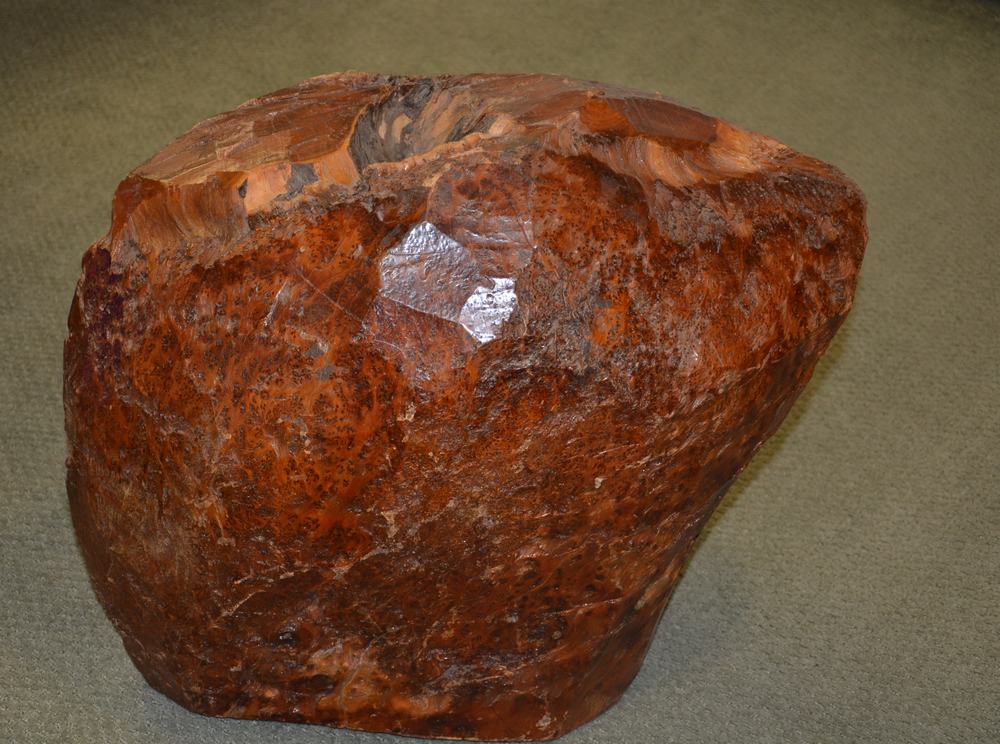 |
This is the burl sitting on the floor just after I got it. At that time I felt like the dog that finally caught the car - "now what?". | |
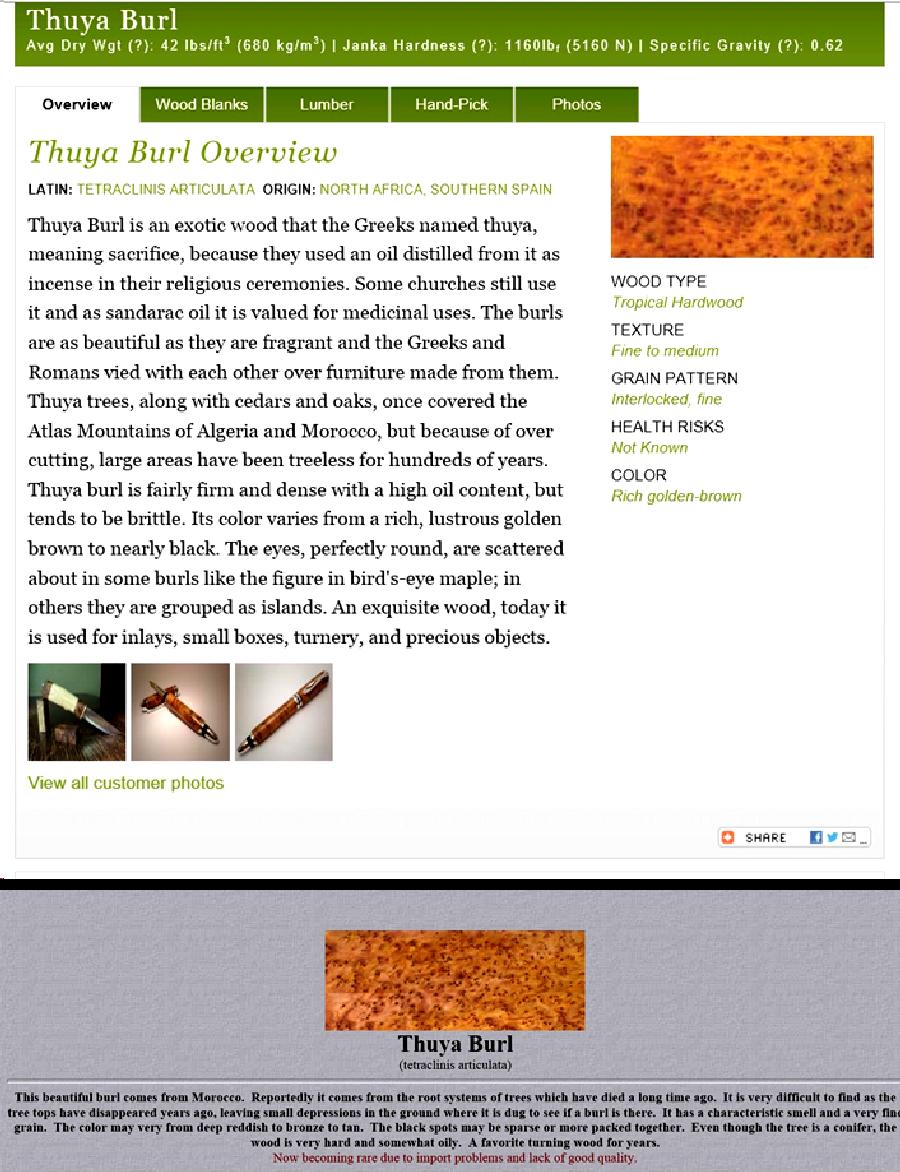 |
Here is a photo of some material that I found and pasted into an image file about thuya.
| |
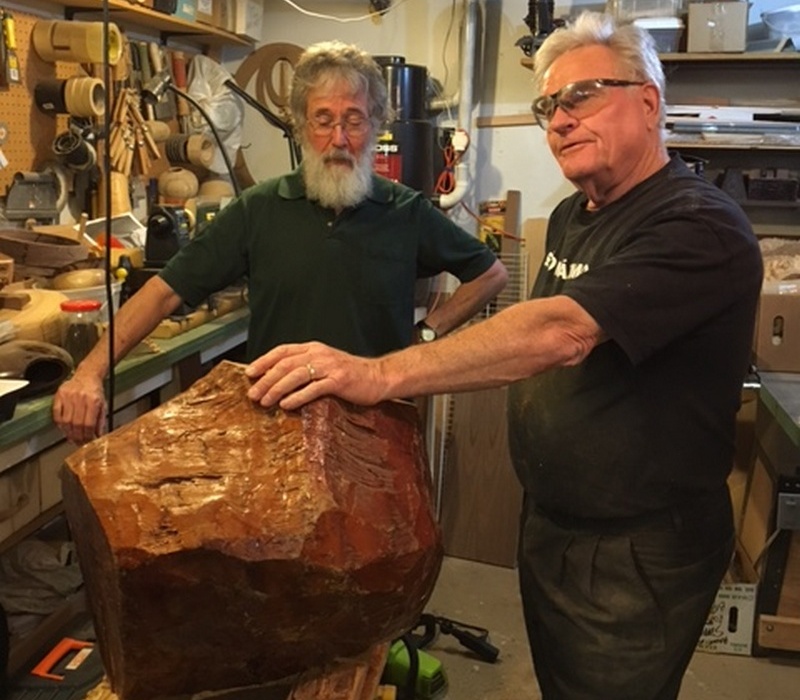 |
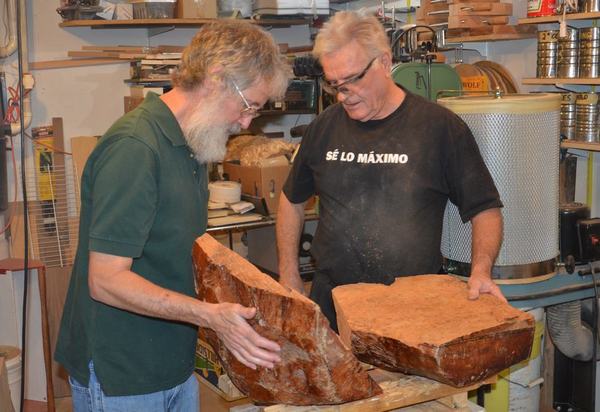
This is Rob Stewart and me looking at the burl and at the markings I had put on it about where I wanted to make the cuts | |
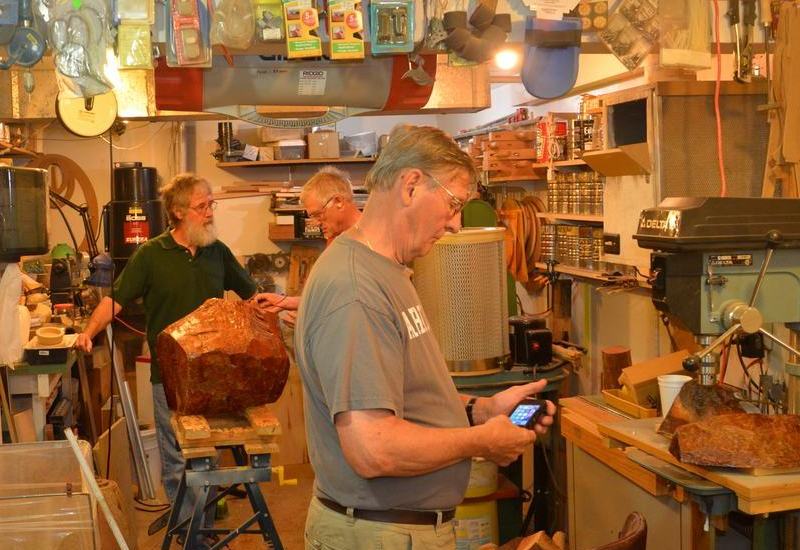 |
Here are Rob, Vern Crandall and Al Cowell, waiting around for me to make a move. | |
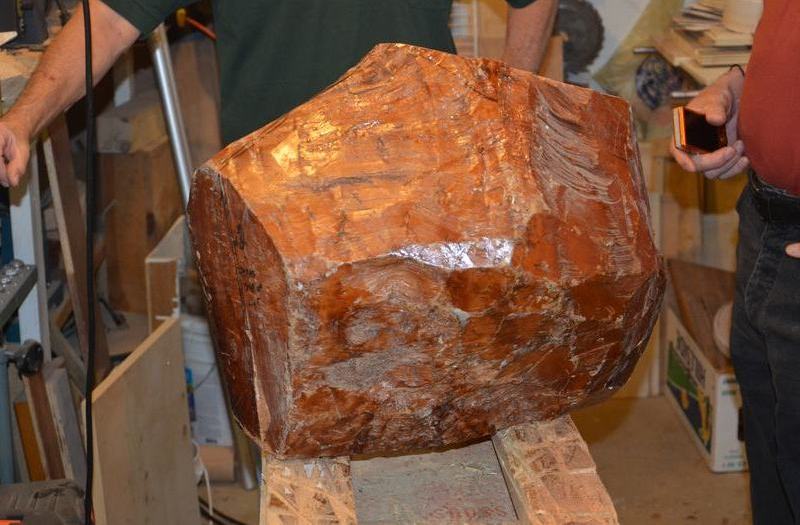 |
Here, it is easier to see the cuts I just mentioned, on the left side, top right and bottom. | |
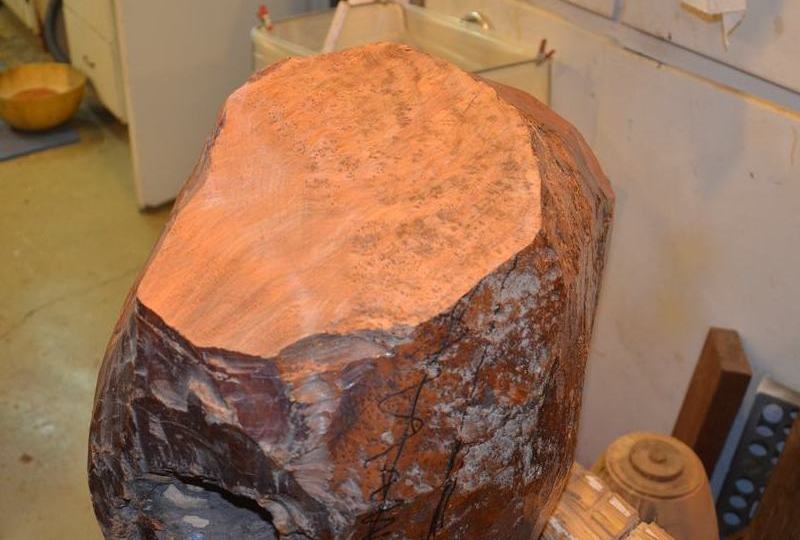 |
This photo reveals the grain from the first cuts. and you can see some of the black Magic Marker lines for the pieces that I see inside the burl. | |
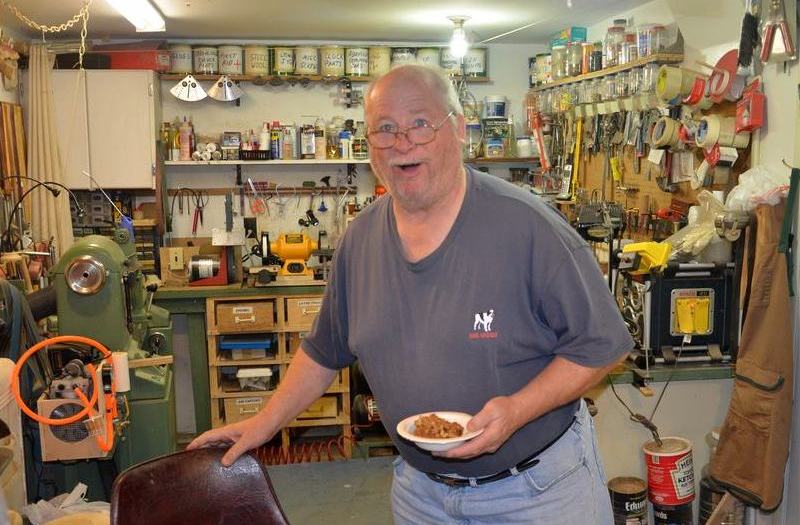 |
Now. we are not going to get together without having some coffee and some goodies, and at my house those come from Karen's kitchen. Here is Jo Vanderhorst enjoying what I recall was cherry crunch made from cherries we picked in our own garden. | |
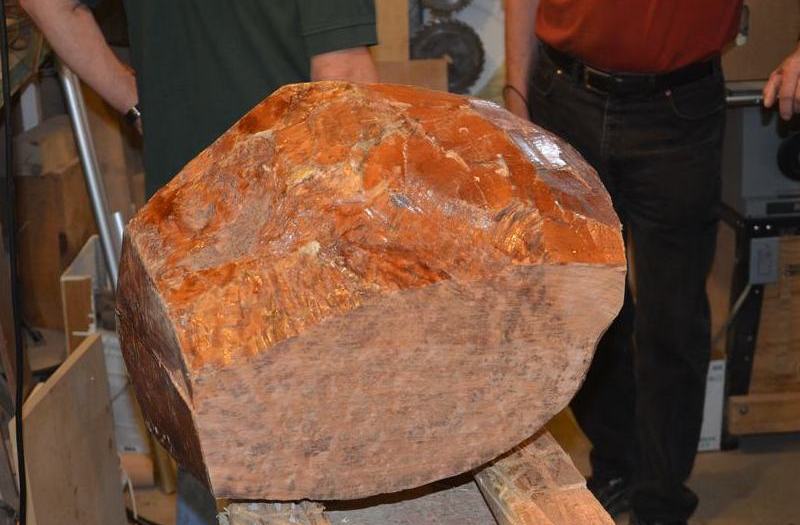 |
This is the bottom cut which was the first one made. These cuts were all made to reduce the piece to a roundish shape for the vase I had in mind. | |
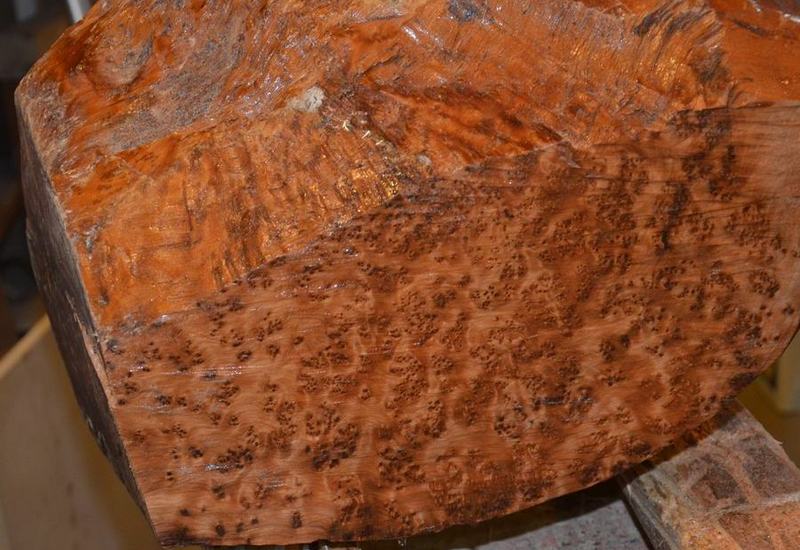 |
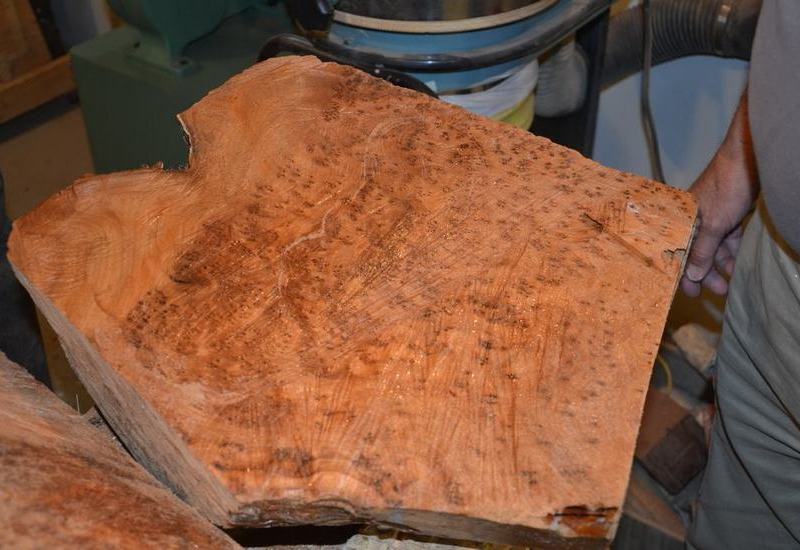
This photo reveals the grain from the bottom cut. When you use a spray of water to wet down the wood you can clearly see the beautiful bird's eye figure of the wood. | |
|
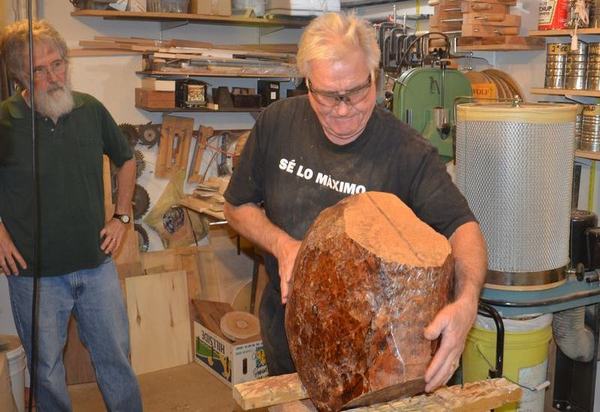
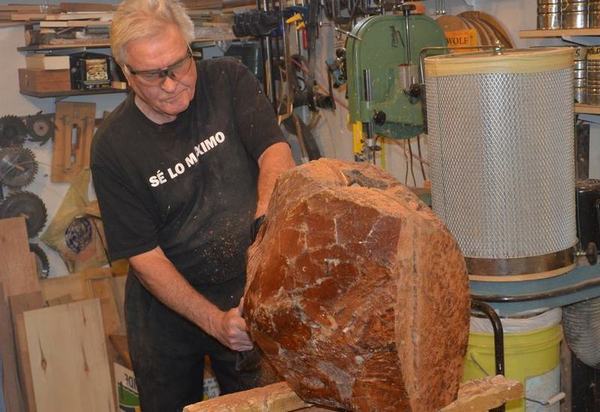
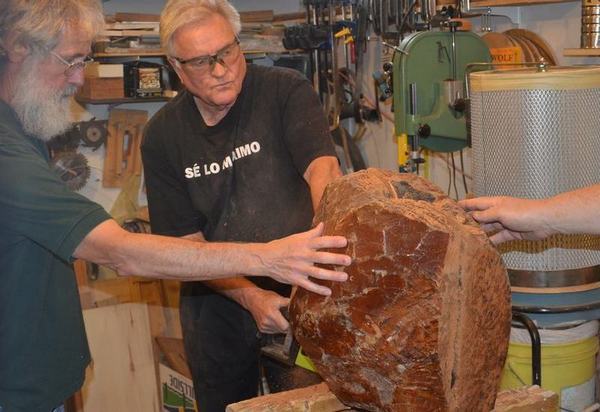
Splitting the burl. The burl was split, but not down the center. I had the primary piece in mind, the clamshell vase at the end of this series, and the split was made just wide enough for the thickness of the clamshell when it was finished. The natural round shape of the outside of the burl was what I envisioned as the basic shape of the vase. This is just a series of four shots showing the progress. By this time, the beautiful cedar smell filled the room and had started to permeate the entire house.
|
|
|---|---|
 |
 |
 |
 |
 |
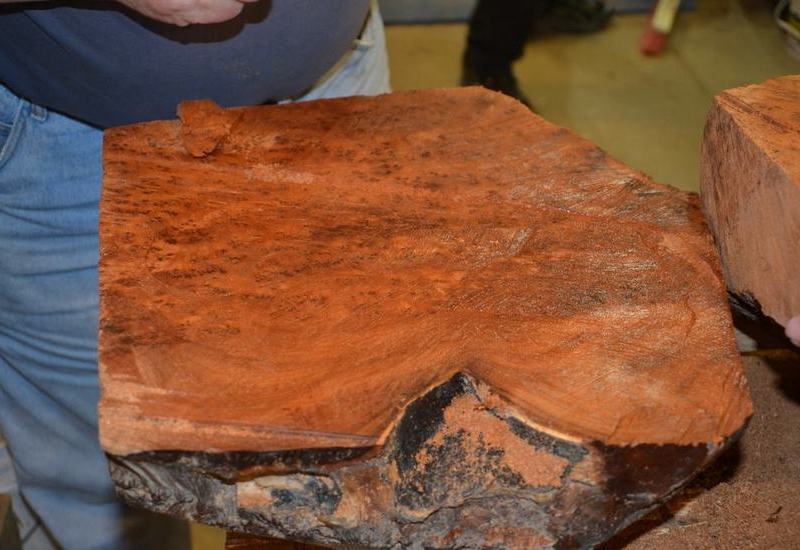
The upper panel is the first time the interior of this burl has seen the light of day. By this time we were not surprised to see the glorious burl and bird's eye in the center of the piece of wood. Just glorious! | |
 |
||
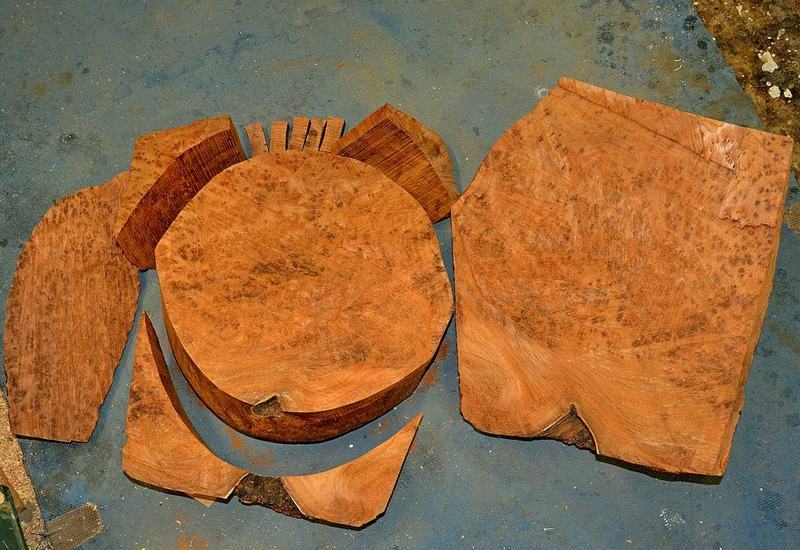 |
After all the cuts were made from the smaller half, I went to the bandsaw and made some cuts. Then I laid the pieces on the floor and explained what I had seen in that half of the burl. | |
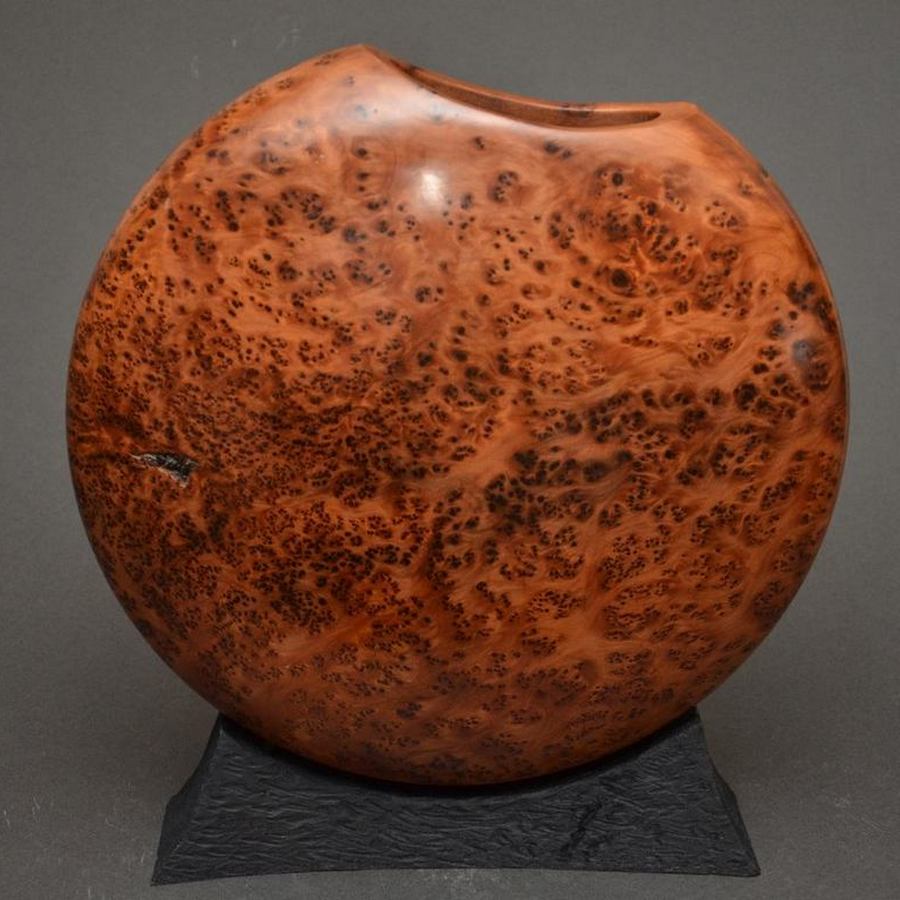 |
I have mentioned the split vase, but not shown it on this page. | |
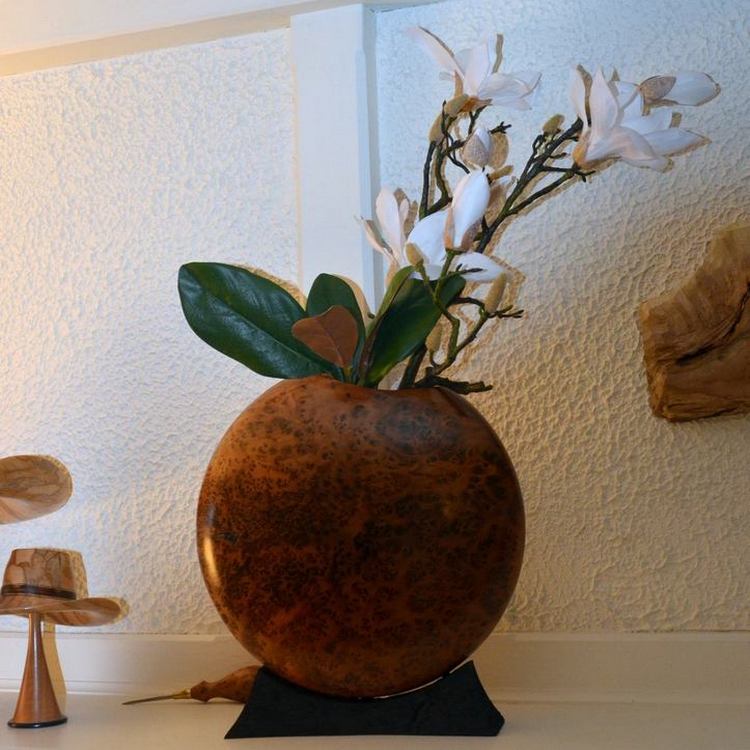 |
This is how I had it displayed at our house, with some Michaels silk flowers. I am, obviously, not a flower arranger, but I wanted folks to know how the piece was intended to be displayed. | |